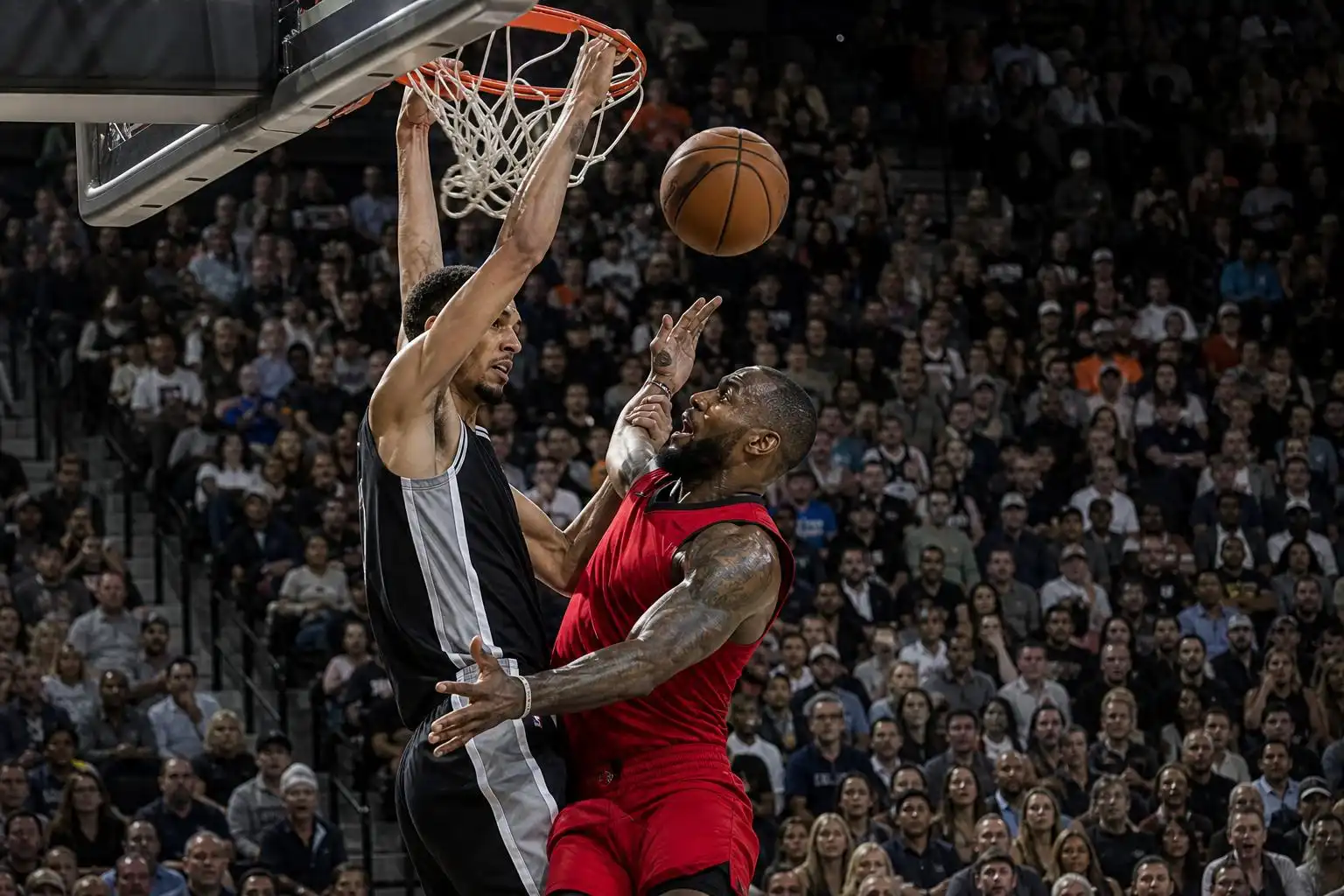

The first Spurs-Rockets clash of 2026-27 already feels bigger than a routine October date. Houston visits San Antonio for an Oct. 23 game in Austin, with the matchup scheduled for 6:30 p.m.[1][6] It will give both teams an immediate measuring stick—and give Texas basketball fans another look at a rivalry that has become relevant again.
For Houston, this is about proving that the second year of the Kevin Durant experiment will be more balanced than the first. For San Antonio, it is an opportunity to pressure-test an older opponent with length, pace and the gravitational force of Victor Wembanyama. One game will not settle the Western Conference, but it can expose whether each team’s offseason answers were real.
Houston Cannot Ask Durant to Run Everything Again
Durant remains the Rockets’ cleanest half-court solution, but that was also part of last season’s problem. When Fred VanVleet went down, Houston leaned too heavily on Durant as both scorer and organizer; opponents eventually attacked the lack of dependable ball-handling around him. The Rockets still won more than 50 games and finished fifth in the West, but San Antonio was among the teams that finished ahead of them.[7]
That is why VanVleet’s recovery from the torn ACL matters beyond his box score. Ime Udoka recently offered an encouraging update, saying the point guard was in the final stages of a rehabilitation process that has lasted roughly a year.[9] Houston needs VanVleet to organize possessions, get Durant catches in his preferred spots and keep Amen Thompson from carrying every difficult creation assignment.
Against the Spurs, those details become impossible to hide. San Antonio can put size on the ball, switch across multiple positions and let Wembanyama erase mistakes behind the initial defender. If Houston’s late-clock offense again becomes “find Durant and hope,” the Spurs will recognize it immediately.
The Rockets’ Bench Has to Become Functional
Houston’s second unit was not merely below average last season—it was a competitive disadvantage. Rockets reserves averaged only 27.6 points per game, ranking last in the NBA by a wide margin. Injuries and lineup changes pushed Reed Sheppard and, at times, Tari Eason into starting roles, draining an already thin bench of two important contributors.[5]
The response was sensible. Houston is counting on the returns of VanVleet and Steven Adams, plus the additions of Marcus Smart and Bogdan Bogdanović, to create more stable rotations.[5] Smart supplies defensive edge and secondary playmaking, while Bogdanović offers shooting and the ability to run pick-and-rolls without forcing Durant to initiate every trip.
Still, reputation will not score bench points. Udoka must determine which veterans can share the floor with Sheppard and Eason without squeezing Houston’s spacing. Against a young San Antonio team eager to run, clumsy all-bench stretches could turn a four-point lead into a double-digit deficit before Durant gets back to the scorer’s table.
San Antonio Should Turn This Into a Track Meet
The Spurs’ clearest tactical advantage is not simply Wembanyama’s height. It is the chaos he can create when San Antonio plays quickly—blocking or altering a shot, sprinting into early offense and forcing Houston’s bigs to defend before they establish position.
That pace should be especially useful against a Rockets roster trying to integrate Smart and Bogdanović while restoring VanVleet and Adams to major roles. San Antonio should make every older Houston contributor run, change directions and make rapid decisions. The goal is not reckless tempo; it is attacking before Houston can construct the physical, switch-heavy defense Udoka wants.
The Spurs must also resist turning the game into a one-on-one duel between Wembanyama and Durant. Wembanyama’s presence bends the defense even when he does not shoot, and San Antonio is at its best when that attention produces cuts, corner threes and easy finishes for teammates. Houston would gladly accept a slow game dominated by contested jumpers.
Jabari Smith Jr. Is a Swing Player in This Matchup
Jabari Smith Jr. quietly enters the season as one of Houston’s most important connectors. He averaged 15.8 points and 6.9 rebounds across 77 games last season, production that reflects both improved durability and a growing role in the starting lineup.[9]
Against San Antonio, Smith’s value will be measured by more than points. He needs to stretch the floor when Wembanyama patrols the paint, rebound well enough to prevent transition chances and survive defensive possessions against different-sized creators. If Smith is hitting catch-and-shoot threes, Houston can pull a rim protector away from the basket and give Durant cleaner driving lanes.
If he is not, the geometry tilts toward the Spurs. San Antonio can crowd Durant, shrink the floor against Thompson and dare Houston’s complementary players to decide the game. Smith is talented enough to punish that plan, but this is the kind of matchup in which he must do it rather than merely threaten it.
Chip Engelland Adds Some Texas Intrigue
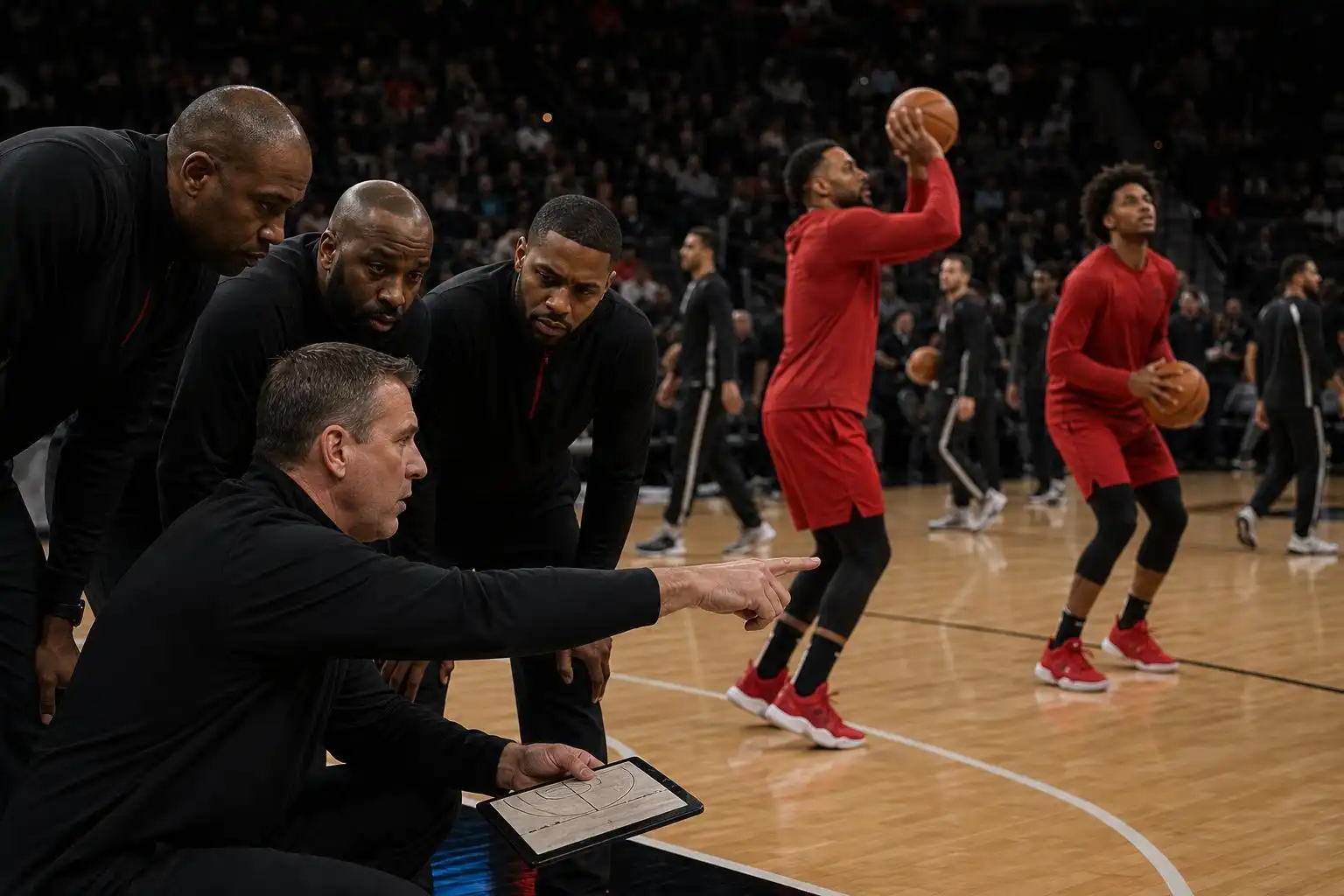
The most fascinating offseason subplot may be sitting on Houston’s bench. The Rockets added former Spurs assistant Chip Engelland, one of the league’s most respected shooting coaches, to Udoka’s staff.[8] San Antonio fans know exactly how valuable his developmental work can become over time.
Engelland is not going to rebuild a roster’s shooting mechanics in one training camp, but his presence matters for players such as Thompson, Sheppard and Eason. Houston’s ceiling rises dramatically if its athletic defenders become reliable spot-up threats. Thompson, in particular, can become a brutal matchup if opponents can no longer sag into the lane when he plays off the ball.
That makes the Oct. 23 game an early checkpoint rather than a final verdict. Watch Houston’s spacing, free-throw routines and willingness to take open threes. Those small indicators may reveal more about Engelland’s early influence than raw shooting percentage in a single night.
My Read: The Pressure Is Squarely on Houston
San Antonio should approach this game aggressively because Houston carries the heavier burden. Durant is entering his second season with the Rockets, the roster has added experienced help, and another fifth-place finish followed by an early playoff exit would make the franchise confront uncomfortable questions about the timeline.[7]
The Spurs can win this matchup by attacking Houston’s transition defense, forcing someone other than Durant to create late in the clock and making the Rockets’ revamped bench prove itself. Houston can answer by controlling turnovers, using VanVleet to diversify the offense and getting enough shooting from Smith, Sheppard and Bogdanović to move Wembanyama away from the rim.
My early lean is San Antonio—not because Houston lacks talent, but because the Spurs are built to interrogate the Rockets’ biggest weaknesses. If Houston leaves Austin with a convincing win, it will mean far more than one result in October. It will suggest Udoka finally has enough creation, depth and lineup flexibility to make the Durant gamble work when the games become much harder.
References
- Houston Rockets vs San Antonio Spurs Oct 23, 2026 Game Details — https://www.nba.com/spurs/game/0022600009-rockets-vs-spurs-austin-tx-10-23-2026
- Three areas the Rockets must improve this season — https://sports.yahoo.com/articles/three-areas-rockets-must-improve-160852345.html
- Houston Rockets vs. San Antonio Spurs live on the radio — https://www.radio.net/sport/nba/houston-rockets-vs-san-antonio-spurs_4485875
- It’s now or never for Kevin Durant in Houston — https://www.thebiglead.com/now-or-never-kevin-durant-houston-2026-2027
- Chip Engelland’s impact on the Spurs has become a blueprint for their rivals — https://airalamo.com/chip-engelland-s-impact-on-the-spurs-has-become-a-blueprint-for-their-rivals
- Houston Rockets: Breaking News, Rumors & Highlights — https://www.yardbarker.com/nba/teams/houston_rockets/78

Leave a Reply