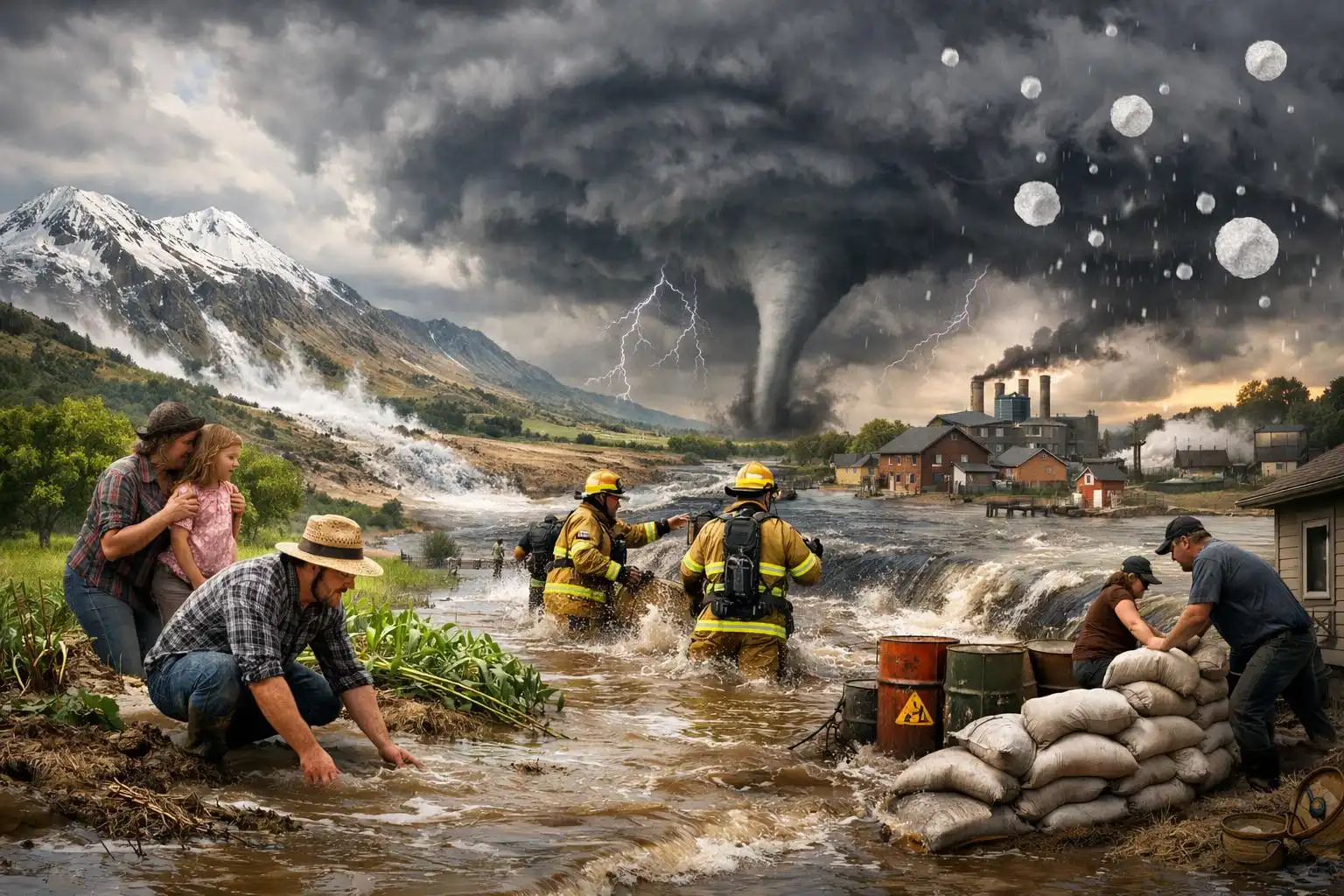

Spring 2026 is already shaping up to be one of the most remarkable—and troubling—seasons in weather history across the United States. From record-shattering heat in the American West decimating snowpacks, to the threat of tornadoes and hail across the heartland, to silent crises like nitrate pollution and toxic waste risks, multiple hazards are converging at once. Let’s break down what’s happening, the science behind it, and the human impacts rippling through the landscape.
A Rapid Snowmelt Stuns the West
Normally, the American West relies on March snowstorms to build up a healthy mountain snowpack—nature’s summer water reservoir. But this year, scientists were “stunned” as instead of a blanket of snow, the region saw “unprecedented, way-off-the-scale warmth,” breaking over 1,500 monthly high temperature records[1]. This has led to “decimation of the water year 2025-26 snowpack across nearly all of the American west.” The timing couldn’t be worse for a region already navigating drought and a century-long overdraw of the Colorado River.
That early melt not only means less water for millions of people, farmers, and wildlife later in the year, but it also stretches high fire risk into more months—creating compounding threats as the climate warms[1].
Severe Storms Loom for the Heartland
As the West contends with the aftermath of lost snow, the central U.S. faces a severe week. An “enhanced risk” (Level 3 out of 5) has been issued for parts of Texas through the Midwest, with tornadoes, large hail, and damaging winds all possible from Wednesday onward[2]. This follows smaller storms earlier this week and marks a dangerous uptick in springtime severe weather, which can bring widespread damage to homes, crops, and infrastructure.
Warming Winters Trigger Hidden Water Hazards
Climate change isn’t just fueling heat waves and storms—it’s also quietly ramping up threats to drinking water. As winters warm and freeze-thaw cycles become more erratic, snow and rain more often fall on unfrozen ground. The result? Pulses of water can wash fertilizer nitrates from farmland into waterways, leading to spikes of nitrate pollution in drinking water[3]; [5].
“This is a big problem for low-income, rural residents across the United States,” warns Samuel Sandoval Solis, a professor at UC Davis, as rural communities often lack advanced water treatment systems[5].
Climate-Driven Flooding and Toxic Waste Risks
The intensifying cycle of drought, extreme rainfall, and flooding now threatens infrastructure beyond homes and farmland. A recent EPA review highlights that hundreds of America’s most dangerous toxic waste sites remain at high risk from flooding and wildfires linked to climate change[4]. This isn’t theoretical—Hurricane Harvey’s 2017 floods triggered spills from tanks holding cancer-causing waste in Houston, with lasting impacts for neighboring communities.
Communities on the Front Lines
Across these hazards, it is often rural, Indigenous, and lower-income communities that face the greatest risks and the least capacity to recover. Families relying on groundwater wells may foot the bill for private water treatment. Drought-threatened farmers face tough decisions. And communities downstream from toxic sites must remain vigilant for spills after storms.
Actions and Safety Tips
What can be done? While many solutions require policy, infrastructure, and climate action, there are steps individuals and communities can take:
- Stay alert for severe weather watches and warnings; consider having a tornado plan if you live in the Plains or Midwest.
- Conserve water now if you’re in the West—a lower snowpack means summer shortages.
- Well users should test water regularly, especially after heavy rains or flooding.
- Communities near toxic sites can get involved with local emergency planning and advocate for disaster resilience.
Looking Forward
Spring 2026’s string of hazards are a stark reminder of the interconnectedness of weather, climate, and human life. As warmth, storms, and water hazards converge, resilience will come from both community action and decisive leadership.
References
- ‘On a whole other level’: rapid snow melt-off in American west stuns scientists – The Guardian
- Severe storms possible this week in swath of U.S. from Texas to Michigan – The Washington Post
- Warming winters lead to more nitrate pollution in the drinking water near farms – AP News
- EPA Watchdog Finds Nation’s Most Toxic Are Vulnerable to Flooding, Wildfires – insurancejournal.com
- Warming winters lead to more nitrate pollution in the drinking water near farms – Greenwich Time

Leave a Reply